27 Customer Discovery Questions That Actually Work
Summary
Most customer discovery conversations fail because founders ask hypothetical questions and hear polite agreement instead of real data. This guide provides 27 field-tested questions organized across five interview phases: problem discovery, behavior mapping, impact and urgency, solution reaction, and buying process. Each question follows the Mom Test principle — past behavior over future speculation. Add the 25-minute structure and the pattern analysis method, and you have a complete discovery system.
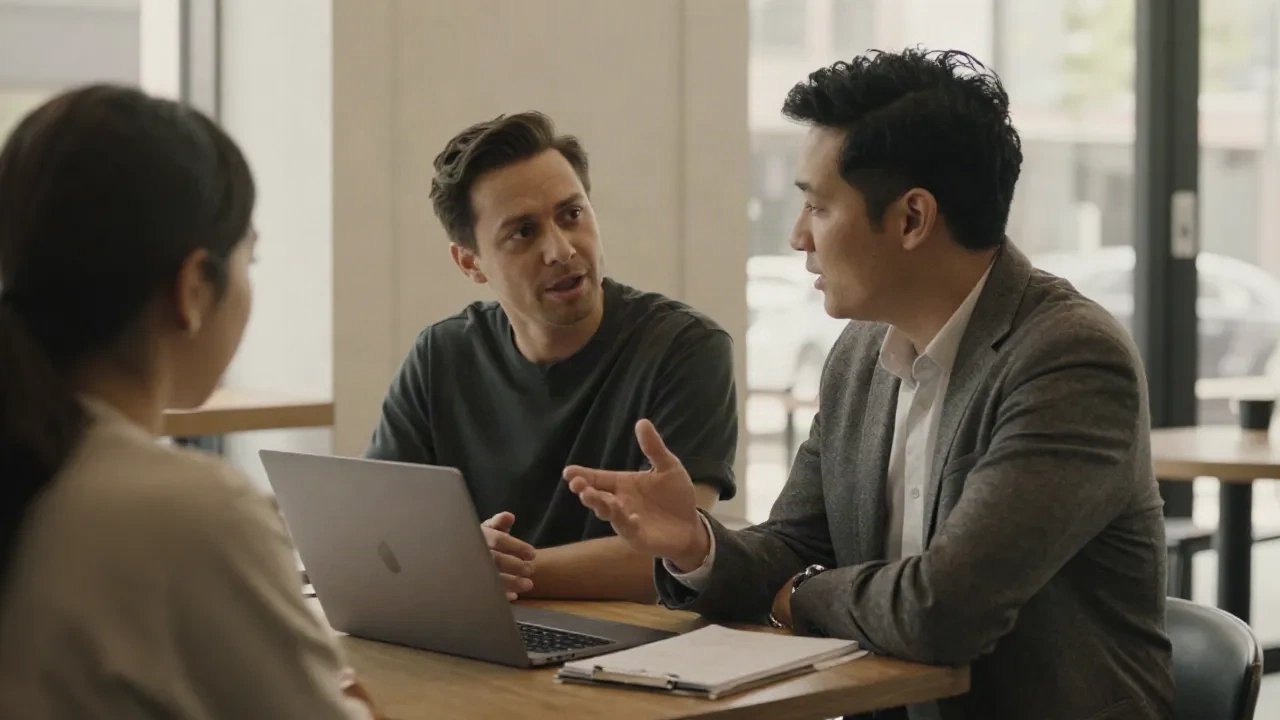
Customer discovery questions are the instruments you use to separate real pain from polite interest. Forty-two percent of startups fail because they built something nobody needed badly enough to pay for, according to a CB Insights analysis of 483 post-mortems. The fix is not a better product. It is better questions, asked before you write a single line of code or spend your first marketing dollar. Here are 27 questions organized by interview phase.
Why Most Customer Discovery Conversations Fail
The typical founder interview goes like this: you describe your product idea, the person across from you nods enthusiastically, and you leave convinced you have product-market fit. You do not.
What happened is not that the person lied. It is that you asked the wrong type of questions. Hypothetical questions like "Would you use a tool that did X?" invite social approval, not data. The answer to a hypothetical is almost always yes, because saying no feels rude.
Rob Fitzpatrick's Mom Test, the most field-tested framework in this space, rests on one rule: ask questions that even your mother could not lie to you about. That means past behavior over future hypotheticals, specifics over generics, and problems over opinions about your idea.
The second failure mode is premature solution disclosure. The moment you describe your product, the interview shifts from discovery to sales. Your interviewee starts evaluating your idea instead of revealing their life. Save any solution discussion for the final two minutes, or cut it entirely.
The 5 Phases of a Customer Discovery Interview
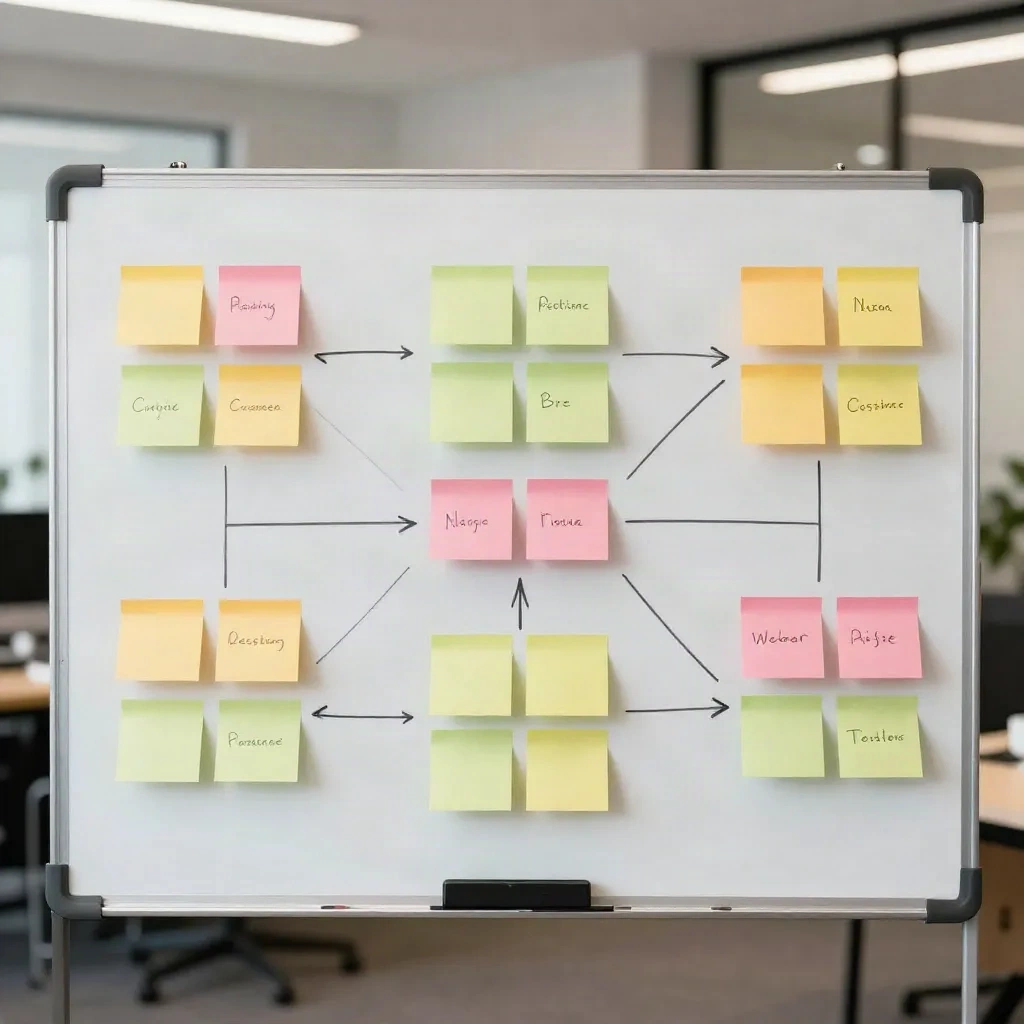
A structured discovery conversation covers five distinct phases. Each phase has a different job.
Problem Discovery - Confirm the pain exists - 7 questions
Current Behavior - Map how they solve it today - 6 questions
Impact and Urgency - Quantify the cost of the problem - 5 questions
Solution Reaction - Test positioning, not product - 5 questions
Buying Process - Understand the decision sequence - 4 questions
Total: 27 questions across 5 phases.
Each phase builds on the previous one. You do not skip to impact before you have confirmed the problem exists. You do not test solution positioning before you understand the current behavior.
Phase 1: Problem Discovery Questions
These seven questions confirm the problem exists and is painful enough to warrant attention. You are not validating your solution yet.
1. "Walk me through the last time you encountered [problem area]." This is the single most important question in any customer discovery interview. It anchors the conversation in a real event, which produces specific details, emotions, and constraints. Generic recollections are near-worthless. Specific stories reveal what actually happens.
2. "What is the hardest part of [area] for you right now?" Open-ended, no leading. Lets the interviewee rank their own pain hierarchy without your influence.
3. "How often does this come up?" Frequency is a proxy for pain intensity. A problem that surfaces once a quarter is categorically different from one that surfaces three times a week.
4. "When this goes wrong, what happens next?" Downstream consequences reveal the real cost of the problem. A founder who says "we lose a deal" is giving you a loss quantification signal worth tracking.
5. "Is this something your team discusses, or do you handle it alone?" This surfaces the organizational dimension of the problem. If it is a shared pain, the buying decision will involve multiple people. If it is individual, you are likely looking at a bottom-up sales motion.
6. "Where does this problem rank among your top three priorities this quarter?" Priority ranking is the fastest proxy for urgency you can get in a conversation. A problem that ranks outside the top three is almost never a paying problem at early stage.
7. "Have you looked for a solution before? What did you try?" Existing workarounds are the strongest signal you can find. If someone built a homemade spreadsheet or duct-taped three tools together, the problem is real and they already have a budget mental model.

Phase 2: Current Behavior and Workarounds
These six questions map the exact tooling and workflows your prospective customer uses today. The workaround landscape is your competitive map.
8. "What does your current process look like, step by step?" Do not assume you know the workflow. Ask for a walkthrough. The friction points are almost never where you expect them.
9. "Which tools are you using to handle this today?" This surfaces your competitive set. Everything here is a tool you will need to displace, integrate with, or be compared to in a buying process.
10. "What do you like about how you do it today?" Counterintuitive, but essential. Understanding what they would not give up tells you what your product cannot break. It also surfaces jobs already covered by your competition.
11. "What frustrates you most about your current setup?" This is where the product gaps live. Collect exact language here. The words they use to describe their frustration are the words you should use in your positioning and outreach.
12. "How long have you been solving it this way?" Time in the workaround signals switching cost. Someone who has used the same spreadsheet for three years has sunk costs and habits. You will need a strong forcing function to move them.
13. "Who else in your organization is affected by this?" Maps the stakeholder web. Useful for both product design and sales motion design.
Phase 3: Impact and Willingness to Pay
These five questions quantify the cost of the problem. Soft pain does not produce paying customers.
14. "If you had to guess, how much time does this cost your team per week?" Time quantification is the first step toward budget conversion. At an $80K annual salary, eight hours per week per employee is roughly $16K per year in loaded cost. That gives you a minimum pricing ceiling signal.
15. "Has this problem ever cost you a deal, a customer, or a hire?" Loss events produce the most reliable willingness-to-pay signals. If the answer is yes, ask for a specific example and get the magnitude.
16. "What would a perfect solution be worth to your team in a year?" Do not use this as a pricing question. Use it as a pain calibration question. Inflated answers indicate strong intent; near-zero answers indicate weak pain regardless of what they said earlier.
17. "What would need to happen for this to become urgent enough to act on today?" This reveals the buying trigger. If they say "nothing, we need it now," the urgency is real. If they describe a future event, you have a timing problem to solve.
18. "How does your team currently budget for tools like this?" Buying process entry. Surfaces whether you are dealing with a credit card buyer, a procurement process, or a departmental budget holder.
Phase 4: Solution Reaction and Buying Process
Introduce your product concept here in two sentences maximum. Then ask questions. Do not solicit feedback.
19. "Does this resemble anything you have seen before?" Benchmark positioning question. Their comparison set tells you how they will evaluate your product and who you will be compared to in a buying process.
20. "What would make you skeptical about this?" The most underused question in startup interviews. Objections raised here are the objections you will face in sales. Collect them now and address them in your positioning.
21. "Who else in your organization would need to be involved in a decision like this?" Buying committee mapping. Most pre-seed founders underestimate how many stakeholders are involved in a $500/month SaaS decision at a 20-person company.
22. "How long does a buying process like this typically take in your team?" Sales cycle benchmark. If they say six months, you are building for enterprise sales infrastructure whether you want to or not.
23. "If you wanted to move forward with something like this, what would the next step look like on your end?" The best signal of real intent in any discovery conversation. Genuine buyers describe a concrete next step. Polite interviewees change the subject.
24. "Is there someone else at your company dealing with this same problem that you could introduce me to?" Referral close. Interviewees who experienced real pain during the conversation will refer you. Those who did not will politely decline.
25. "What would I need to show you in a first demo to make the next meeting worth your time?" Agenda co-creation. This surfaces their evaluation criteria before you prepare any demo or pitch material.
26. "What would make you regret not acting on this sooner?" Urgency signal and potential case study framing. The answer is often the business outcome they are trying to protect.
27. "Is there anything I did not ask that you think I should know?" Always end with an open door. Some of the most valuable discovery data surfaces in the last ninety seconds, after the interviewee has decided to trust you.
The 25-Minute Interview Structure That Gets Results

Do not run an open-ended conversation. Use a structure that allocates time to each phase.
0-5 min (Framing): Introduce yourself, confirm you are learning (not selling), ask for role context
5-12 min (Problem + Behavior): Questions 1-13, following threads that produce specific stories
12-18 min (Impact): Questions 14-18, push for numbers and loss events
18-23 min (Solution and process): Two-sentence concept, then questions 19-26
23-25 min (Close): Question 27 plus referral request
Two rules for the structure: follow the thread when someone gives a specific story (the schedule is a container, not a constraint), and stop talking. The silence after a hard question is where the real answer lives.
Founders who delegate discovery before running the first ten interviews themselves tend to receive summarized findings that lose the texture and nuance. The first fifteen conversations are worth doing directly.
How to Spot Signal vs. Noise After 15 Interviews
Run 15 interviews before drawing any conclusions. Patterns become visible at that threshold; individual responses are outliers until then.
After 15 interviews, look for four signals:
Frequency. If more than 50% of interviewees mentioned the same problem unprompted, the pain is real.
Emotional intensity. Expressive language and unprompted storytelling signal genuine pain. Measured, polite agreement usually signals social approval.
Workaround consistency. If most interviewees have the same homemade workaround, you have confirmed the problem and identified your minimum viable alternative to displace.
Language patterns. The exact words interviewees used to describe their problem are your marketing copy. Do not paraphrase. Use their words in your outreach subject lines and landing page headlines.
The pattern is the signal. One person's strong opinion is an outlier. Five people who all used the phrase "we lose track of" without being prompted are telling you your headline.
Three Mistakes That Invalidate Your Discovery Data
Confirming what you already believe. If your notes from 12 interviews all support your original hypothesis, something is wrong. Real discovery surfaces things that challenge your assumptions at least 30% of the time. If it does not, you are leading the witness.
Interviewing your warm network only. Friends, ex-colleagues, and LinkedIn connections who already like you are a biased sample. They will be generous with their time and optimistic about your idea. Find cold interviewees through industry communities, cold email, and LinkedIn searches filtered by exact job title and company stage.
Stopping at five interviews. A sample of five is statistically unreliable and emotionally seductive. With five conversations, your data fits your confirmation bias perfectly. Fifteen interviews is the minimum. Thirty gives you enough data to segment by customer profile and start identifying which persona has the sharpest pain.
Here is the framework. Adjust the question wording to your context, drop the phases that do not fit your buying motion, and run it until the patterns saturate. The goal is not to complete all 27 questions in every conversation. The goal is to leave each interview with a specific story, a quantified pain, and one referral.