GTM Strategy Template: 7 Sections Every Founder Needs
Summary
Most GTM strategy templates are built for 50-person teams. This one is built for a two-person founding team. Seven sections cover the ICP snapshot, positioning one-liner, motion selection, channel plan, 30-day launch sequence, metrics dashboard, and an iteration protocol. Each section is a working document, not a slide. Fill it once, run a 20-minute weekly review, and update it as you learn.

A GTM strategy template is only useful if it was built for the team size using it. Most templates assume a dedicated marketing team, a RevOps hire, and a budget for paid acquisition. None of that applies at pre-seed. This template strips the GTM plan down to 7 sections a two-person founding team can fill in a single afternoon. Each section produces a working document, not a deliverable. Fill it, run it for 30 days, then update what the market told you.
According to a CB Insights analysis of 2,000+ B2B startups, 72% fail to meet GTM targets in year one. Not because the product is wrong. Because the plan was built for a team that does not exist yet.
Why Most GTM Templates Break Before Week 3
Most templates treat the GTM plan as a one-time output. You fill it in, present it to your co-founder or first investor, and it sits untouched in Notion for 90 days.
The structural problem: a GTM motion is a feedback loop, not a document. Every customer conversation recalibrates the ICP. Every outreach batch updates the message. Every call either confirms or destroys the channel hypothesis.
This template accounts for that by structuring each section with two columns: a launch hypothesis and a revised-after-8-weeks column. Most founders only fill the first column. That is where the real failure happens. The GTM strategy template is not done when the launch hypothesis is complete. It is done when the revised column has entries.
Here are the 7 sections.
Section 1: ICP Snapshot
Before anything else, you need a named list. Not a persona card. Not a market size slide. A list of actual companies.
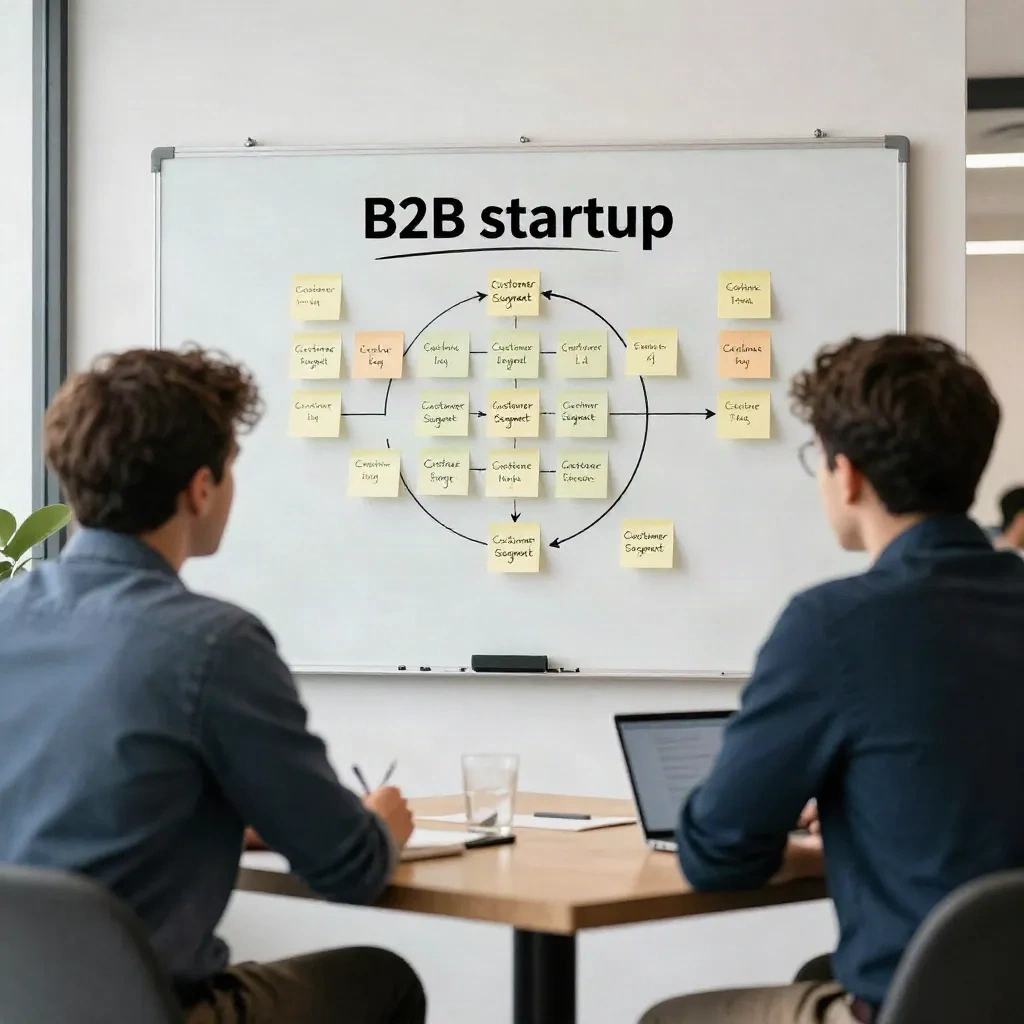
The ICP snapshot is a three-column table you fill by looking at your 10 best hypothetical customers and extracting what they have in common:
Build your first account list by pulling 20 to 30 companies from Apollo or LinkedIn Sales Navigator that match the trigger event, not the ICP profile. That is where intent lives.
Section 2: The Positioning One-Liner (and the Table Behind It)
Most founders write the one-liner directly. That is how you get positioning that sounds polished but collapses in the first sales conversation.
Fill this table before writing a single word of messaging:
The most common mistake in this section: founders describe their product category rather than the before-and-after for the buyer. "AI-powered GTM platform" is a category. "Cuts the time to first 10 customers from 6 months to 6 weeks" is a before-and-after. Build the positioning table around the second type.
Section 3: Motion Selection
This section gets either skipped or handled with a single sentence in most templates. It deserves a full decision log.
The question is not PLG vs. sales-led. The question is: who does the selling for the first 8 customers, and what does that cost in founder time per week?
Choose one motion to optimize for in the first quarter. Mixing two motions in the first 90 days is the single most reliable way to learn nothing about either.
Section 4: Channel Plan
One primary channel. Two supporting channels. Nothing else.
Most founders spread across 5 or 6 channels simultaneously and do none of them well. Research from ZoomInfo's pipeline data shows that B2B teams concentrating 70% of effort on one channel see 2.5 times the pipeline velocity of teams running parallel experiments from day one.
After 4 weeks of data on the primary channel, you will have enough signal to decide whether to double down or replace it. That decision belongs in Section 7.
If paid acquisition is on your roadmap for Quarter 2, build the creative infrastructure before you need it. Testing ad variants against your ICP during the outreach phase gives you data on messaging angles that double as email copy.

Section 5: 30-Day Launch Sequence
Planning the first 30 days in advance removes the decision fatigue that kills most pre-launch phases. This is the structure used across the launches we have analyzed:
Week 1: Foundation
Finalize ICP snapshot and first account list of 50 companies
Lock the positioning one-liner (test on 3 warm contacts by end of week)
Set up outreach infrastructure: dedicated domain, warm-up sequence, basic CRM tracking
Write 3 email variants testing different trigger-event angles
Week 2: First batch
Send 30 first-touch emails to Tier 1 accounts only
Publish one LinkedIn post testing the core problem statement (not a product announcement)
Join one relevant Slack community and observe for 5 days before participating
Week 3: First conversations
Run the first 3 to 5 discovery calls; use the first 15 minutes to validate the trigger event assumption, not to pitch
Revise the ICP snapshot based on what you heard
Note which problem statement generated the most engagement in replies
Week 4: First revision
Review channel performance: meetings booked, reply rate, conversion by account type
Decide: double down on the primary channel or run a 2-week experiment with a different trigger
Fill in the first entries in the "revised" column of the template
The 15 first minutes of each discovery call are worth more than 10 slides of pitch. The job in week 3 is to listen, not to sell.
Section 6: 5-Metric Dashboard
Five numbers. No more for the first 90 days. Adding attribution models and LTV analysis before you have 5 customers is not analysis. It is delay.

Section 7: Iteration Protocol
Most templates skip the most important section: what to do with the document after week 1.
The rule is one weekly review, 20 minutes, no slides. Three questions only:
What did we learn this week that changes our ICP snapshot?
Did the primary channel perform above or below the target rate?
What do we stop doing next week based on what we know?
Change one variable at a time. If you change the ICP, the message, and the channel simultaneously, you cannot know which lever moved the needle. Most founders who report that their GTM motion is "not working" changed three things at once and cannot diagnose the failure.
After 8 weeks with this protocol, you will have two completed columns: the launch hypothesis and the revised reality. The gap between them is your actual GTM learning. That document is worth more than any consultant deck produced before the first customer call.
Here is the framework. Adjust it according to your segment, your ACV, and the conversations your customers are actually having with you.