Elevator Pitch Examples: 6 Teardowns and a Formula
Summary
A good elevator pitch names one buyer, one cost that buyer already feels, and one proof point, in about 75 words, which is what 30 seconds holds. These elevator pitch examples cover seed investors, cold calls, conferences, no-traction founders, partners and email. Each shows the weak draft first, then the version that works, built on a five-line formula you can adapt by audience, time with a stopwatch and test with a stranger.

The best elevator pitch examples share one trait: they name a specific buyer, a cost that buyer already feels, and one proof point, in about 75 words. That is what a 30-second pitch holds at normal speaking pace. Everything below is built on that constraint. You get a five-line formula, six teardowns of founder pitches with before and after versions, and a short list of habits to drop. The companies in the examples are illustrative, so adapt the numbers to your own data.
What does a good elevator pitch actually contain?
Most founders stall because they try to describe the company. The listener does not need a company description. They need to decide whether to ask a second question.
Here is the framework. Adjust it to your context.
1. Who (Name the buyer by role and size): "Finance leads at 20 to 200 person SaaS companies"
2. Cost (State the pain in time or money): "close the books 9 days late every month"
3. What (One verb, one outcome, no category label): "we automate the reconciliation step"
4. Proof (One number or one named customer): "cut close from 9 days to 3 across 11 pilots"
5. Ask (A next step small enough to say yes to): "Can I show you the 10-minute demo this week?"
Most pitches fail on line 2. The founder jumps straight to the product, and the listener has no reason to care yet.
How long should the pitch be, in words and seconds?
Plan on three lengths and memorize all of them.
One line, 12 to 20 words. What you say when someone asks "what do you do?" at a coffee line.
30 seconds, about 75 words. The standard. Speaking pace sits around 150 words per minute, so 75 words fits with room for a breath.
90 seconds, about 200 words. For a warm intro call where the other person has asked for more.
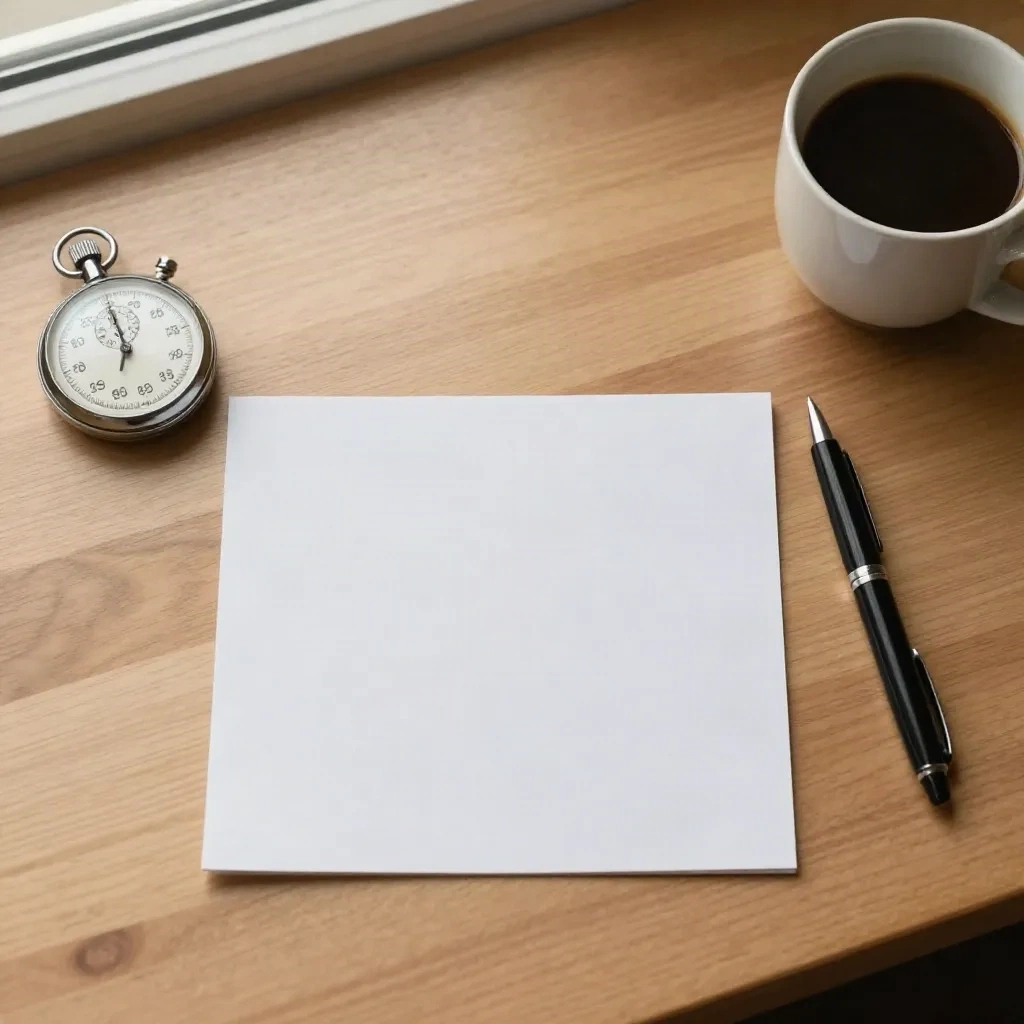
Time yourself out loud. A pitch that reads well on a page often runs 45 seconds when spoken, because you pause where the commas are. Cut until the stopwatch says 30.
Skip the 60-second middle version. It has no real use case. Either the person is interested enough for 90 seconds or they are not interested enough for 30.
Six elevator pitch examples, with the weak version first
Each example shows the draft most founders write, then the version that works. The weak versions are composites of the patterns we see in founder submissions. The strong ones follow the five lines above.
Example 1: The pitch to a seed investor
Weak: "We are an AI-powered platform that is changing how finance teams work. We have a lot of traction and an incredible team."
Strong: "Finance leads at 20 to 200 person SaaS companies close their books nine days late every month, because reconciliation lives in spreadsheets. Ledgerly automates that one step. Across 11 pilots we cut close time from nine days to three. We're raising a $2M seed to move from pilots to paid. Can I send you the one-page summary?"
What changed: the buyer has a role and a size, the pain has a unit (days), and the ask is a one-pager, not a meeting. An investor can forward that page without you in the room.
Example 2: The pitch to a prospect on a cold call
Weak: "Hi, I'm calling about our new platform that helps companies improve their outbound results."
Strong: "Hi Priya, I'm Marco. I work with sales teams of five to fifteen reps who spend Monday morning copying lead data between tools. We remove that step. Teams like yours get about four hours back per rep per week. Is Monday research something your reps complain about?"
What changed: it ends on a question about their world, not a request for a demo. The question is the pitch. If the answer is no, you saved both of you five minutes.
Example 3: The pitch at a conference, to a stranger
Weak: "I run a startup in the HR space. It's like Slack but for onboarding."
Strong: "You know how new hires spend their first two weeks asking the same 40 questions? We built a Slack bot that answers them from your existing docs. Three companies use it, and the average manager gets back about three hours a week."
What changed: "like Slack but for X" is gone. Analogies force the listener to import every assumption they have about the reference product. Describe the behavior instead. The "You know how..." opener works because it makes the listener nod before you say anything about your product.

Example 4: The pitch with no traction yet
Weak: "We're pre-revenue but we have a really big vision and the market is worth $50 billion."
Strong: "I ran clinic operations for six years and watched no-shows drain about 15 percent of appointments every week. I've built a reminder flow that reschedules automatically. I'm looking for five clinics to pilot it free for 60 days, in exchange for weekly feedback calls."
What changed: with no customers, your proof is your own history in the problem. The ask is small, specific and time-boxed. Skip the market size. Every founder quotes one, and none of them move a listener.
Example 5: The pitch to a potential partner
Weak: "We would love to explore ways our two platforms could work together."
Strong: "Your agency clients ask for reporting that you currently build by hand. Our tool produces it from the same data in about ten minutes. I'd like to test it on two of your accounts, and if it saves your team time, we talk about a referral arrangement."
What changed: it opens with the partner's problem, not yours. The first test is small (two accounts) and the commercial conversation comes after the proof.
Example 6: The pitch you send by email
Weak: "I wanted to introduce myself and my company. We offer a modern tool for teams."
Strong: "Your team posted three product designer roles last month. Our tool turns design feedback threads into tickets automatically, which is the step most designer-heavy teams do by hand. A 12-person team saved about five hours a week. Worth a 15-minute look?"
What changed: the first line proves you did 30 seconds of homework. The pitch is the same five lines compressed into four sentences, because nobody reads a longer email from a stranger.
Which part of your pitch should change by audience?
Keep the skeleton. Swap lines 1, 4 and 5.
Investor: line 1 emphasis: Market segment and size; line 4 proof: Pilot results, revenue, growth rate; line 5 ask: One-pager or intro to partner
Buyer: line 1 emphasis: Their job title; line 4 proof: Result at a company like theirs; line 5 ask: Short demo or a question
Partner: line 1 emphasis: Their customer's problem; line 4 proof: Test result on shared accounts; line 5 ask: Pilot on two accounts
Recruit: line 1 emphasis: The problem worth a career; line 4 proof: Who already joined and why; line 5 ask: Coffee, not a commitment
The mistake is rewriting the whole pitch for each person. You will forget the version you built and ramble. Keep one core and three variations of the proof line.
Positioning is what holds this together. If you cannot state who you are better than, and for whom, the pitch will drift. A useful test: say your "who" and "cost" lines to a friend outside your industry and ask them to repeat back the problem. If they cannot, line 2 is too abstract.
What should you skip in every elevator pitch?
Most of these are habits, not mistakes of knowledge. Founders know better and still do them under pressure.
Skip the category label. "AI-powered platform" tells the listener nothing. Say what the product does and for whom.
Skip the market size. The $50 billion number appears in nearly every pitch. It signals that you have not talked to buyers.
Skip the founder biography unless it is your proof. Six years in clinic operations is proof. "Passionate entrepreneur" is not.
Skip the feature list. One outcome. If you need three, you have three pitches.
Skip the closing flourish. "We would love to chat" gives the listener nothing to say yes to. End on a specific question.
Skip the memorized monotone. A pitch recited from memory sounds like a recording. Memorize the five lines, not the sentences.
How do you practice so it sounds natural?
The first 15 minutes of a real conversation teach you more than ten rehearsals, but rehearsal still earns its time. Use this order.
Write the five lines on an index card. One line each, not sentences.
Say it out loud against a stopwatch. Cut anything past 30 seconds.
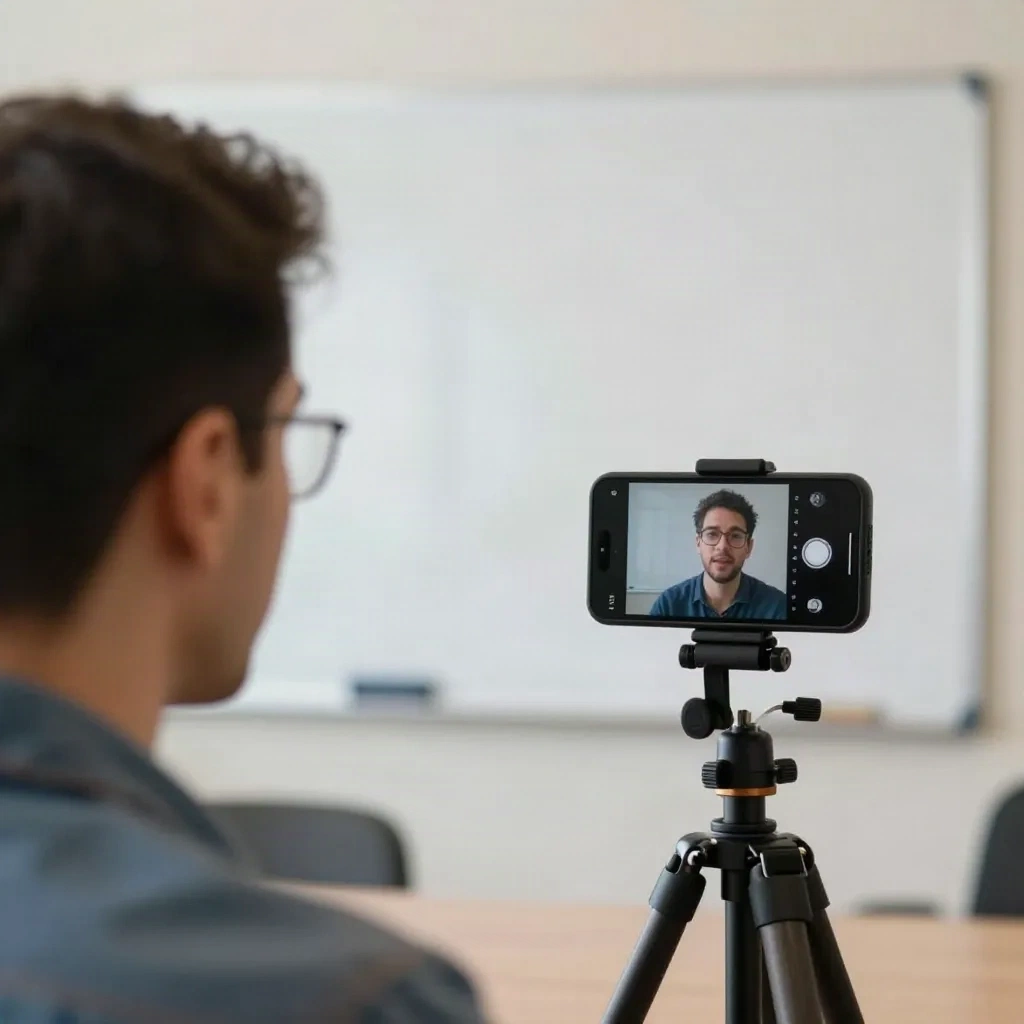
Record a video on your phone. Watch it once with the sound off. Fix whatever you do with your hands.
Pitch it to someone outside your industry. Ask them one question: "What do I do, and who is it for?"
Run it live five times in the next week. Change one word each time. Keep a note of what got a follow-up question.
If your pitch lives in a deck, a tool helps with the slide that carries it. Gamma and Beautiful.ai both generate a one-slide version from a short brief, and that slide forces the same discipline as the 30-second test.
How do you know the pitch is working?
Measure what happens after you finish speaking, not how it felt.
Count the follow-up questions. If someone asks a specific question about the customer or the number, line 2 or line 4 landed. If they say "interesting" and change the subject, the pitch described your company and not their problem.
Track the ask conversion. Out of ten live pitches, how many accepted the small next step? Under three means line 5 is too big or line 2 is too vague. Above five means you can raise the ask.
If you take sales calls, record them and listen to how prospects restate your problem in their own words. Those restatements are better copy than anything you will write alone. Call recorders such as Fathom save the transcript, so you can pull the exact sentences.
What would we actually use this week?
Pick one audience, not all six. Write the five lines on a card tonight, time it tomorrow morning, and say it to three real people before Friday. Then change line 2 based on what they repeated back.
The founders who get the most from it treat the pitch as a hypothesis about the buyer, and every conversation as a test of line 2.