AI Marketing Trends 2026: What Actually Changes Your GTM
Summary
The ai marketing trends 2026 that move the needle for GTM leaders are not about adopting more tools. Only 6% of the 87% of marketers using AI today are extracting measurable bottom-line impact. The gap is framework: ICP signal capture before outreach, topic clusters before AEO, structured sequences before automation. This piece maps six shifts, identifies what to skip, and closes with the minimum stack from 12 analyzed pre-seed-to-Series-A launches.
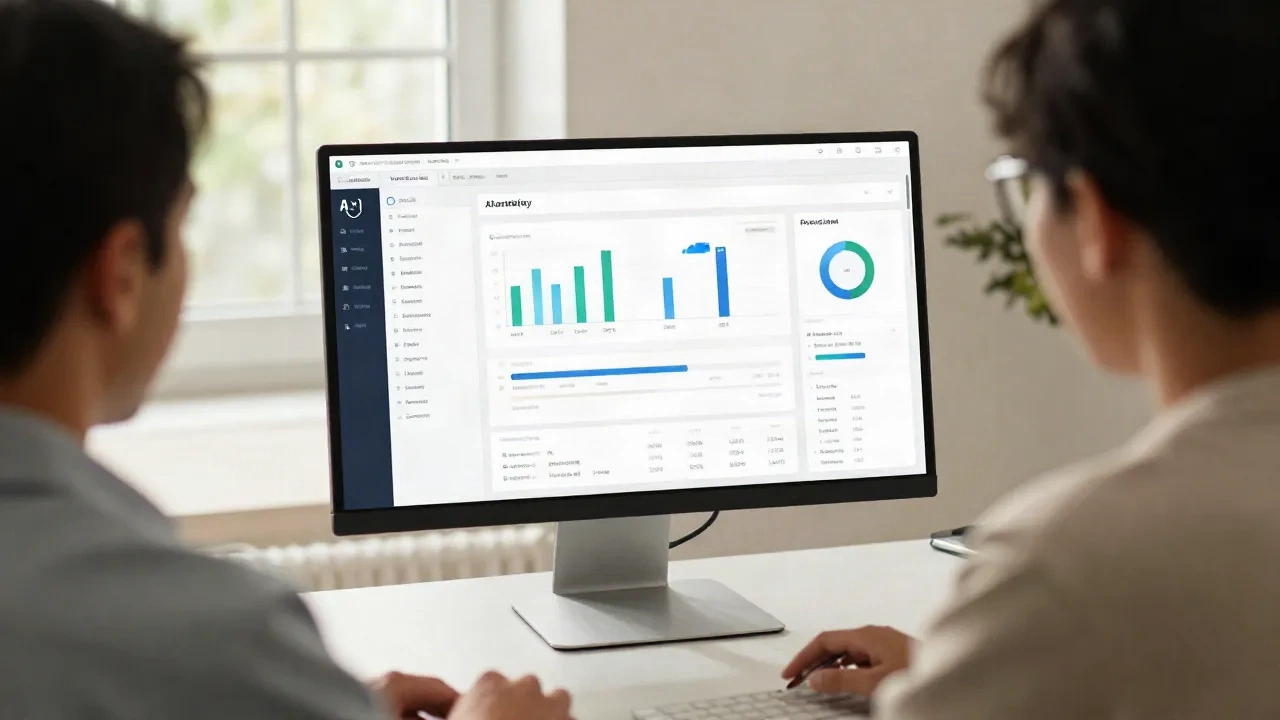
The ai marketing trends 2026 cohort breaks into two categories: approaches your team adopted because they were accessible, and approaches that actually changed your pipeline velocity. Eighty-seven percent of B2B marketers now run at least one AI workflow, up from 51% two years prior. Six percent qualify as high performers extracting measurable bottom-line impact. The gap is not access to better tools or a larger AI budget. It is a framework that determines where to point the tools you already have. This breakdown covers six shifts that matter for pre-seed to Series A GTM teams and identifies which trends are worth your attention right now.
Why 87% of AI Marketing Adopters Stall at Layer One
Most AI marketing adoption in 2026 is happening at the workflow layer. Someone connects a language model to the content calendar. Someone else runs outreach copy through an AI editor. These are productivity improvements, not GTM improvements. They remove time from existing tasks but do not change the structure of the tasks themselves.
The founders outpacing their cohort have restructured the sequence instead: ICP definition first, signal detection second, content production third. AI executes within that structure. Without the structure, AI accelerates noise at the same rate it accelerates signal.
Layer 1 - Workflow: AI generates, edits, and summarizes. Indicator: saves hours per week but does not change who you target.
Layer 2 - Sequence: AI handles signal detection, lead scoring, and personalization. Indicator: changes who you contact and when.
Layer 3 - Architecture: AI inputs to positioning, pricing, and channel decisions. Indicator: changes what you sell and to whom.
Most teams operate at Layer 1. The 6% extracting bottom-line value are at Layer 2 or 3. The jump does not require new tools. It requires a framework for ICP signal capture before any copy is written.
Before choosing the channel, settle the question of the segment. That is still where the bottleneck lives.
From AI Tools to Agents: The Sequence That Changes Coverage
Enterprise AI agents are now embedded in 40% of business applications, up from 18% in 2024. The shift from tools to agents matters for GTM because tools require human initiation on every action. Agents handle end-to-end sequences autonomously.
A practical example at the outreach level: identify a target account matching your ICP definition, enrich the contact via a data layer, draft a personalized email calibrated to the company's most recent trigger event, schedule the follow-up, and log the full sequence to your CRM. Average manual work reduction in well-configured B2B outreach sequences: 50%.
For a three-person GTM team, that is not marginal efficiency. It is the difference between covering 200 accounts per week and covering 800 with the same calendar availability.
The current boundary: agents handle top-of-funnel orchestration and mid-funnel follow-up well. They fail on nuanced objection handling and complex multi-stakeholder deals where context from previous human conversations is the deciding variable. Map the agent to the parts of the sequence where scale is the constraint, not judgment.
Answer Engine Optimization: The GTM Content Shift You Cannot Defer
Google AI Overviews are compressing organic click-through rates by 18% to 47% depending on query category. In the GTM strategy space, queries that historically sent 200 monthly visits to a well-ranked article are now sending 90 to 130, with the remainder absorbed by AI-generated answers at the top of the results page. That compression is not temporary.
The counter-strategy is not chasing clicks you cannot recover. It is being the source the AI cites. That requires three conditions running simultaneously:
Structured content answering specific questions. "What is a land-and-expand GTM motion for developer tools?" outperforms "GTM strategies for SaaS" because AI systems can resolve it to a clear, citable answer. Generic topics produce generic citations.
Clear factual claims with traceable sources. AI systems favor citable content with verifiable data points over opinion pieces with no anchoring.
Topic authority via cluster, not individual page. A cluster of 6 to 8 tightly related articles on ICP definition outperforms a single 4,000-word guide. The cluster signals topical depth; the single page signals one-off coverage.
Teams publishing 3 to 4 pieces per week in a defined topic cluster report referral traffic from AI citations 3x higher than teams publishing one broad piece per week.
Skip if your site has fewer than 5 articles. The authority signal does not exist yet. Volume comes first, cluster architecture second.
Hyper-Personalization: Where the Reply Rate Shift Comes From
Personalization in 2026 outreach is not inserting the prospect's first name. It is calibrating the pitch angle to the intent signal. A contact who just posted about hiring their first sales hire gets a different message than one who just published a cost-cutting analysis. The first needs sequence architecture input. The second needs pipeline efficiency framing. The email that works in the first context fails in the second.
AI-driven signal-to-pitch personalization improves reply rates by 70% compared to standard merge-field personalization, based on A/B data reported across GTM teams in 2026. The prerequisite is a signal capture layer running before any copy is written.
The sequence that shows up consistently across startups that hit strong early traction:
Monitor intent signals: job posts, funding announcements, content published, tool reviews, leadership changes
Score by ICP fit: role, company size, funding stage, tech stack signal
Generate angle-first copy: problem statement specific to the signal, angle to your solution, concrete ask in four sentences
Send from the founder or GTM lead, not a team alias or generic address
Each of these steps can be partially automated. None of them should be fully automated at the moment the message goes out. The human review at step 4 catches the cases where the signal was a false positive.

Founder-Led Marketing Gets an Infrastructure Layer in 2026
Founder-led marketing is not a 2026 trend. What changed is the AI infrastructure available to run it without proportional time cost. The 15 minutes of a discovery conversation that used to produce one insight note now produces a tagged transcript, a LinkedIn draft, a FAQ entry for the product team, and a positioning signal, all processed within an hour.
The pattern surfacing among pre-seed founders generating consistent pipeline through content:
Record the client conversation. Any transcript tool. The raw vocabulary is the asset.
Extract the friction language. The exact phrases the prospect used to describe the problem, not your paraphrase of it.
Write one post using that language directly. No strategic reframing. The vocabulary resonance is the point.
Generate three variations in 10 minutes and publish the strongest. The AI layer speeds the iteration, not the original insight.
Sixty-two percent of early-stage B2B pipeline in 2026 traces back to founder content rather than paid acquisition channels, the highest proportion recorded for this funding stage. The cheapest channel is also the highest-converting one at pre-seed, when the founder's credibility is the product's primary authority signal.
One calibration note: founder-led content collapses when the founder stops. Build a minimum weekly framework that produces three posts in a 45-minute block, not a daily publishing commitment that disappears at the next board prep cycle.
What Does Not Work: The AI Marketing Moves Worth Cutting This Year
AI content at volume without ICP specificity. Publishing 30 articles per month with broad keywords and generic frameworks is faster than it has ever been and performs worse than it ever has. The March 2026 helpful content update targeted mass-generated content without editorial curation at a higher rate than prior updates. Volume without a distinct point of view is not a GTM asset.
AI chatbots substituting for discovery calls. Chatbots qualify top-of-funnel leads reasonably well. They fail at the discovery conversation that reveals why your ICP is buying now and which objection you have not addressed in your positioning. The first 15 minutes of a real client call are worth more than 500 chatbot transcripts on that question. The chatbot optimizes for qualification; the call generates positioning insight. Those are not the same task.
Outsourcing the positioning decision to an LLM. You can load your competitive research into any large language model and receive a positioning statement in 30 seconds. It will be grammatically clean and strategically inert. Positioning is a judgment call built from win/loss patterns specific to your sales motion, not a synthesis task. AI accelerates the research phase, not the decision itself. Keeping that distinction sharp is what separates the 6% from the 87%.
The Minimum Stack That Shows Up in Analyzed 2026 Launches

The table below comes from 12 GTM launch analyses run in 2026, filtered to founders who reached $500K ARR in under 12 months. This is not the aspirational stack. It is what they actually operated.
Signal capture (intent and enrichment): Clay
Outreach (sequenced email): Apollo.io
CRM (pipeline visibility): HubSpot Starter
Content ops (distribution and topic authority): Notion plus an AI writing layer
AEO coverage (answer engine presence): internal cluster of 6 or more articles
One pattern that resurfaces consistently: the stack works at $0 to $500K ARR because it is founder-operated and requires minimal coordination overhead. At $1M ARR, you need an operations layer to maintain data quality and keep sequences calibrated as the team grows. The most common failure mode at that stage is adding tools at Layer 1 when the actual bottleneck is at Layer 2, in sequence quality and signal accuracy.
Here is the framework. Adjust it to your segment and funding stage.